
Toronto–Budapest Direct Flights: Key Benefits
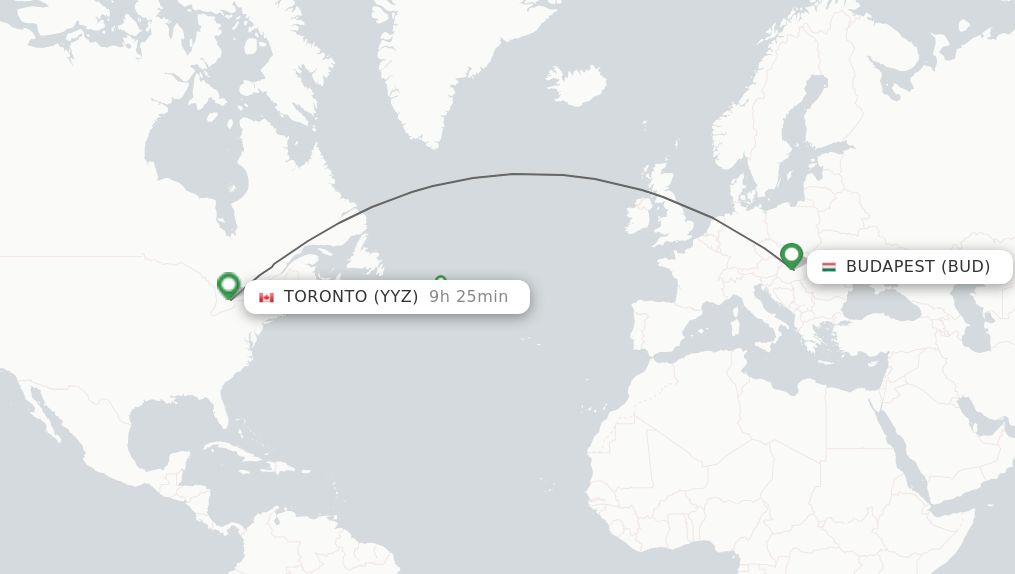
Air Canada will resume seasonal non-stop flights between Toronto Pearson (YYZ) and Budapest Ferenc Liszt (BUD) from 6 June to 24 October 2026, with four weekly services on Boeing 787-9 Dreamliner aircraft. This direct route removes layovers for almost 90,000 yearly travelers between Canada and Hungary, saving time and improving comfort for leisure, business, and medical tourists.
Benefits for Canadian travelers
-
Direct access to Budapest’s cultural attractions, river cruises on the Danube, and MICE events, supporting inbound tourism from one of Hungary’s highest-spending overseas markets.
-
Smooth same-day connections via Toronto to nearly 200 destinations across North and South America and the Caribbean, ideal for the large Hungarian diaspora community based in the Greater Toronto Area.
-
Multiple cabin options – Business, Premium Economy, and Economy – with convenient midday departures that suit leisure, VFR (visiting friends and relatives), and corporate travelers.
Benefits for Hungarian travelers
-
A comfortable non-stop alternative to connecting flights for trips to Toronto, with around 48,000 seats on offer during the 2026 season.
-
Stronger family, cultural, and business ties with Canada, plus easy onward access to the Americas from Air Canada’s largest hub.
-
Added economic value through increased Canadian visitor spending in Budapest and across Hungary.
This seasonal service revives a proven route, promising time and cost savings while deepening bilateral tourism and business links.
Tourism Impact in Canada and Hungary
Hungary: Tourism growth from Canada
The Toronto–Budapest route is expected to lift Hungarian tourism by attracting more high-spending Canadian visitors beyond the current 90,000 annual passengers. Canadians are already among Hungary’s top overseas spenders, and the direct route supports growth in:
-
Leisure and city-break tourism, including river cruises departing from Budapest.
-
MICE events and business travel, alongside VFR trips from Toronto’s large Hungarian community.
By replacing multi-stop itineraries with a single non-stop service, demand is likely to increase, generating tens of thousands of extra arrivals and higher tourism revenue for Budapest and other regions.
Canada: Tourism gains from Hungary
The route will also enhance inbound tourism to Canada from Hungary and Central Europe. Toronto’s hub provides connections to a wide range of Canadian destinations and North American attractions. While precise forecasts are limited, easier access from Budapest supports:
-
Leisure visits to Canada’s natural wonders and multicultural cities.
-
Business travel and diaspora-related trips, feeding into broader transatlantic growth.
Overall, reciprocal flows between the two countries should strengthen as the route matures.
Why Canada–Hungary is attractive for hair transplants
The new Toronto–Budapest non-stop route makes Hungary’s medical tourism, especially hair transplantation, significantly more accessible for Canadian men. Budapest clinics are known for:
-
Advanced FUE and DHI techniques at 30–70% lower prices than in Canada or the United States.
-
Package prices from roughly 1,900–4,000 USD for 1,000–3,000 grafts, translating to large savings for patients with moderate to high hair loss.
For many Canadians, the combination of EU-level medical standards and more affordable care makes Hungary a compelling choice.
Cost savings and treatment structure
Canadian men typically pay around 3,650 USD on average in Hungary for mid-range FUE sessions, compared with substantially higher rates in North America. Packages frequently include:
-
Initial consultation and pre-op checks.
-
Local anesthesia and the full FUE procedure.
-
Short recovery stays of 10–14 days that align neatly with the June–October 2026 flight season.
This allows travelers to combine treatment with a short break in Budapest, enjoying cultural sights, thermal baths, and cuisine while recovering in comfort.
Quality, convenience, and access
Reputable Hungarian clinics – including well-known names in Budapest – provide:
-
Experienced surgical teams using modern FUE/DHI tools.
-
English-speaking coordinators and medical staff.
-
High recommendation and satisfaction rates, with final results typically visible 9–12 months after surgery.
Direct flights remove the stress and time loss of connections, making two-way travel for hair transplantation smoother for working professionals, including those using vacation time.
Hair Transplant Costs: Hungary vs Canada – Price comparison
Hungary offers hair transplant surgery at a fraction of Canadian prices, especially for FUE. Typical ranges are:
-
Per graft (FUE)
-
Hungary: about 1.28–2.55 USD
-
Canada: about 3.50–10.00 CAD
-
-
2,000–3,000 graft FUE sessions
-
Hungary: roughly 3,000–5,500 USD
-
Canada: roughly 8,000–16,000 CAD in major cities such as Toronto and Vancouver
-
-
All-inclusive packages
-
Hungary: around 3,650 USD on average, including hotel and airport transfers.
-
Canada: commonly 12,000–22,000 CAD without accommodation.
-
In practice, many Canadian men can save 8,000–15,000 CAD or more by traveling to Budapest, even after paying for flights and local expenses.
Flight details and total trip value
From 6 June to 24 October 2026, Air Canada’s Toronto–Budapest route will operate four times a week using Boeing 787-9 Dreamliners. Approximate profile:
-
Flight time: about 8 hours 40 minutes non-stop.
-
Budapest departure around early afternoon, arriving mid-afternoon in Toronto.
-
Toronto departure late evening, arriving late morning the next day in Budapest.
Average round-trip economy fares are expected to fall roughly in the 1,000–1,500 USD range, varying by season and booking window. Even at the upper end of that range, net savings remain considerable when compared with domestic surgery costs.
Extra value drivers
Hungarian prices frequently cover:
-
Pre-op consultation and diagnostics.
-
Local anesthesia, FUE session, and often PRP therapy.
-
Hotel accommodation and airport transfers arranged by the clinic.
By contrast, Canadian prices usually exclude accommodation and additional therapies, and often charge separately for follow-up visits. Per-graft pricing in Hungary, sometimes as low as around 0.83–1 USD per hair in larger sessions, makes it possible to address more extensive hair loss in a single procedure without premium surcharges.
Within months of the route’s launch, Canadian men will be able to combine non-stop Toronto–Budapest flights with Hungary’s long-established medical tourism infrastructure, achieving a fuller head of hair at a much more affordable total cost.